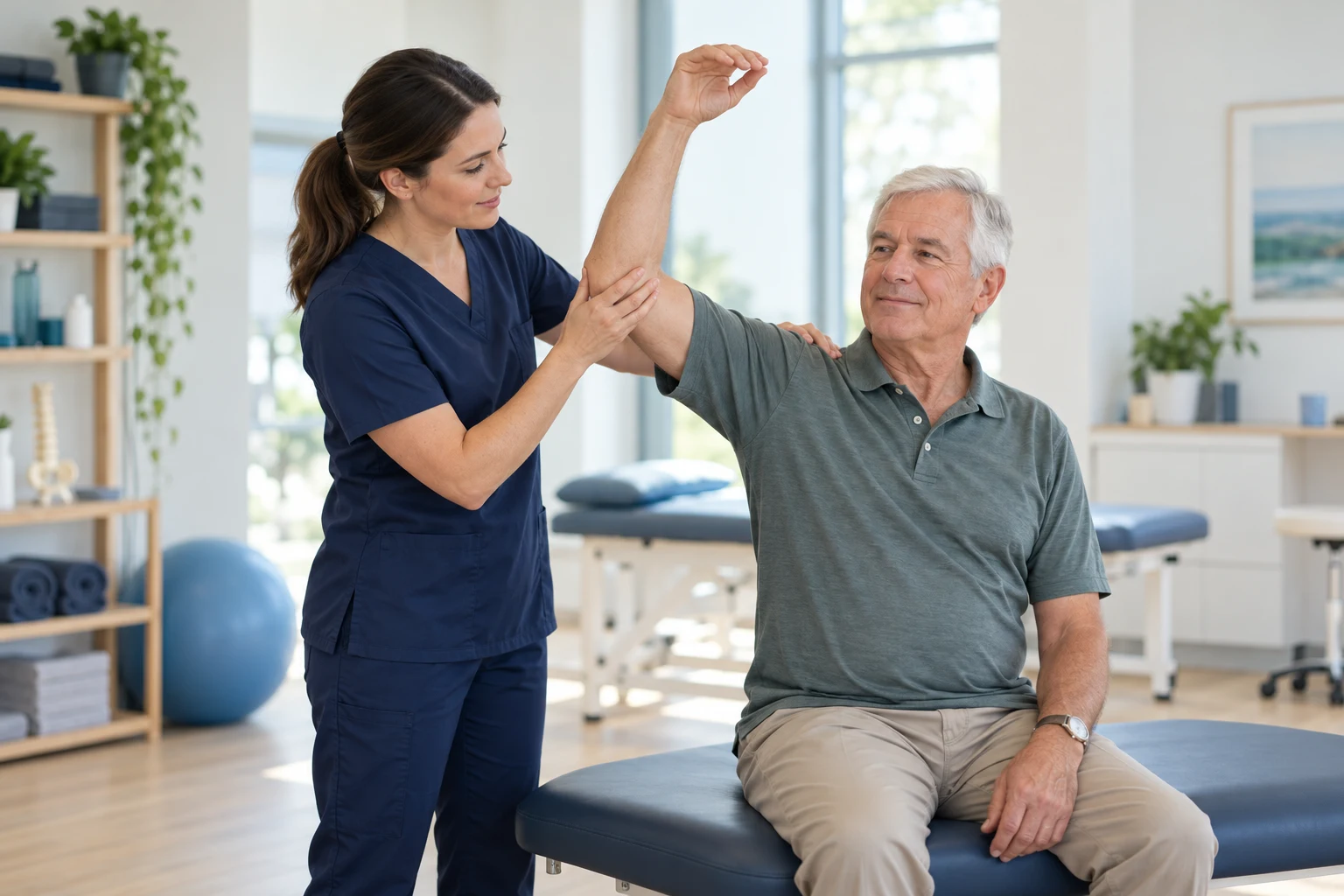
What is sports physiotherapy & injury rehabilitation?
Sports physiotherapy addresses movement problems related to athletic and recreational activity. Assessment considers the injury as well as training demands, previous problems and recovery. Rehabilitation should move beyond feeling comfortable in everyday life to preparing for the specific challenges of your activity.
The assessment and treatment options below explain this area of care. Contact the clinic to discuss your symptoms, confirm suitability and arrange the appropriate appointment.
Conditions and symptoms
- Ankle sprains and recurring feelings of instability
- Muscle strains and tendon-related pain
- Running-related lower-limb complaints
- Shoulder or elbow problems associated with sport
- Knee injuries and rehabilitation following medically managed ligament injury
- Post-operative sports rehabilitation within surgical restrictions
How it can affect your day
You may notice pain during a particular movement, reduced power, stiffness after training or difficulty trusting an injured limb. Tell the clinician how training volume changed before symptoms started, what you can still do and whether competition deadlines are influencing your choices. Pain-free rest alone does not establish readiness for full sport.
Assessment tools and testing techniques
A focused assessment combines your history with selected clinical tests and outcome measures. The examples below are chosen according to the condition, safety and clinician’s training; not every test or device is needed or available at every appointment.
Joint range and strength measurement
What it assessesCapacity relevant to the injured region
Goniometry and, where available, dynamometry help quantify selected movement and force. Pain, test position and effort are recorded. Side-to-side comparisons can be useful but may miss weakness that affects both sides.
Injury-specific clinical testing
What it assessesA focused examination of the injury
The clinician selects tests appropriate to the suspected tissue and stage of recovery. Ligament stress, tendon loading or joint tests may contribute to the clinical picture. Significant instability or suspected fracture may require medical investigation rather than more testing.
Single-leg balance and reach tasks
What it assessesControl during single-leg activity
Controlled balance or reach tasks explore how you manage body position and load. The clinician considers movement strategy and symptoms as well as task performance. Test choice depends on the injury; not every athlete needs the same battery.
Hop and landing assessments
What it assessesHigher-demand lower-limb function
Later-stage hop or landing tasks may assess performance and control after selected lower-limb injuries. They require suitable readiness and supervision. A good distance or symmetry score alone does not establish that return to competition is safe.
Running and sport movement analysis
What it assessesThe demands of your particular sport
Observation of a relevant task can help identify how symptoms relate to pace, technique or fatigue. The task may be adapted to the clinic setting. Video may assist discussion where available and with consent, but specialist motion-capture equipment is not assumed.
Load history and return-to-sport readiness
What it assessesPhysical demands, confidence and training context
Training volume, recent load changes, recovery and confidence are reviewed with functional findings. Questionnaires may help capture perceived limitations. Readiness is a shared clinical decision involving more than a single numerical threshold.
Understanding your assessment findings
Your assessment should identify current limitations, appropriate training modifications and criteria for progression. Suspected fracture, major instability or another significant injury may require medical investigation. Returning to sport can involve shared decisions with the athlete, physiotherapist, physician or surgeon and, with consent, the coach.
Treatment techniques and rehabilitation
Each technique has a purpose within a wider rehabilitation plan. Selection depends on assessment findings, your preferences and how you respond to care.
Graded strength and conditioning
Progressive resistance and endurance work builds capacity for the affected area and related movements. The program changes as your ability and activity demands change.
When it may be considered
Loss of force, endurance or load tolerance relevant to the injured area and sport.
What a session may involve
Exercise is progressed from an appropriate starting load towards sport demands. The clinician reviews response during activity and afterward before changing the dose.
Mobility and symptom management
Targeted mobility work and selected hands-on techniques may support movement and comfort. They should serve the wider rehabilitation plan rather than replace preparation for sport.
When it may be considered
Restricted or uncomfortable movement that interferes with active rehabilitation.
What a session may involve
Selected techniques are paired with purposeful exercise. Their effect is checked against relevant movement rather than used as a stand-alone return-to-sport decision.
Balance, landing and movement retraining
Selected exercises develop control during tasks relevant to the injury and sport. Later stages can introduce changes in speed, direction or complexity when clinically appropriate.
When it may be considered
A need to rebuild control during single-leg, landing or directional tasks.
What a session may involve
Practice develops from controlled tasks to higher demand when ready. Speed, fatigue and uncertainty may be introduced in stages appropriate to the sport.
Load management and return-to-sport planning
Training volume, recovery and exposure to sport-specific demands are adjusted in stages. Taping or bracing may be considered for selected situations, with an explanation of its role and limitations.
When it may be considered
A transition from rehabilitation to training, practice and competition.
What a session may involve
You agree on activity modifications and progression criteria. Taping or a brace, if used, supports the plan and does not replace readiness assessment.
A rehabilitation plan built around your goals
A staged plan may move from comfortable daily activity to controlled drills, modified practice and fuller participation. Progression should be based on your response and relevant criteria, not only a calendar date. Discuss what to do if symptoms return when the training load increases.
More about this service
For clinic-specific information, visit Sports Physiotherapy & Injury Rehabilitation page ↗. You can also meet the team or book an appointment with the clinic.
What to expect at your first appointment
Wear clothing suitable for movement and bring the footwear normally used for your activity. Relevant imaging reports, surgical instructions and a brief training history can help. Let the clinician know about upcoming events, but expect return decisions to prioritize appropriate readiness rather than a promised deadline.
How progress is measured
Measures can include strength, range of movement, balance and performance of a relevant task, alongside symptom response and confidence. A good result in the clinic does not automatically reproduce under fatigue or in competition. Reintroducing sport demands is therefore part of the rehabilitation process.
Home care and day-to-day support
Follow the agreed training and exercise plan rather than adding every drill found online. Record useful information such as symptoms during activity and how you feel afterward. Ask which activities remain appropriate and how to adjust a session if the response is different from expected.
When to seek medical care
Seek medical assessment after major trauma, obvious deformity, inability to bear weight or rapidly increasing swelling. Suspected concussion requires appropriate assessment and a specific return-to-sport process. Call 911 for collapse, chest pain or severe breathing difficulty during exercise.
Choosing the right physiotherapist
Ask about the clinician’s registration, relevant training and experience with your particular concerns. Explain any communication, privacy, accessibility or assistance needs before booking. A suitable appointment should leave room for questions and a clear discussion of your choices.
Frequently asked questions
Is sports physiotherapy only for competitive athletes?
No. It is relevant to recreational exercise, running, gym training and other physical activities as well as organized competition.
Can I keep training while recovering?
Sometimes an adjusted program is appropriate. The injury, medical advice and symptom response determine which activities and loads are suitable.
Will taping fix the injury?
Taping may have a supporting role in selected cases. It does not replace the strength, movement practice or healing considerations needed for recovery.
How is return to sport decided?
The decision considers the injury, symptoms, functional capacity, sport demands, confidence and relevant medical restrictions. There is no single test that guarantees safety.
Can you guarantee I will be ready for an event?
No. A realistic plan can be discussed, but recovery and readiness vary. A competition date should not be presented as a guaranteed treatment outcome.
Is post-operative rehabilitation different?
Yes. The procedure, healing stage and surgeon's protocol influence progression. Bring written restrictions and ask how communication with the surgical team will work.
Further readingProfessional resources to explore at your own pace3 resources
- 01APTA: Ankle sprain rehabilitation (opens in a new tab)
- 02Australian Physiotherapy Association: Ankle sprain (opens in a new tab)
- 03NYU Langone: Foot and ankle rehabilitation (opens in a new tab)
General information to help you understand your options. An individual assessment is needed for advice about your own health.